
Veneers or Braces: Which Is Best for a Straight Smile?
La Habra/Chino Hills, CA – If you’ve been living with a less-than-ideal smile and you’ve decided it’s time to make...
Read More

Accepting New Patients
Dr. Robert Gire grew up in a very modest household and never had the opportunity to get his teeth straight as a child. His smile was very crowded and not pleasing in appearance. During his preparation for dental school interviews, while most students were practicing what they were going to say, Dr. Gire was trying to figure out a way to speak without showing his teeth. They were that bad. In his mind he kept thinking, nobody goes to a dentist with bad teeth or to a dermatologist with bad skin. He truly felt that his crippling smile would definitely prevent entrance in the dental school. Luckily he was accepted and he proceeded to see an orthodontist immediately to seek treatment after the program started.
That is why Dr. Gire strongly and emphatically believes all children and adolescents should absolutely have the opportunity to correct their smile. The confidence and self-esteem that comes from a nice smile is immeasurable and no child or young adult should have to endure hiding their smile and thwarting their personality. This is why he strives to make things affordable for any family budget while not compromising on board-certified care.
Smiles are so unique and personal. Everyone has an idea of what the ideal smile and bite look like to them and not everyone wants the same smile or the same goal. Orthodontics is not a cookie-cutter profession where one treatment plan fits all. The key is to fit the desired smile that’s being framed by the individuals face and skeletal composition. Dr. Gire understands the role teeth play in creating properly facial support and symmetry and his orthodontic approach always takes this into account.
Dr. Gire knows that the orthodontic world is rapidly changing, so he is dedicated to staying up to date on the latest treatments, technology and materials available. He is the clinical director of a well-known international orthodontic manufacturing company and he has maintained a teaching position at the University of Southern California, Ostrow School of Dentistry teaching orthodontics. Staying involved with these two entities allows Dr. Gire and his team to always provide the most up-to-date and very best care to their patients.
Dr. Gire grew up in beautiful Cheyenne, Wyoming and now calls Orange County is home. His wife, Dr. Elizabeth Tsay, is an optometrist and works in the Kaiser system in Southern California. The pair love being active in their community and can be seen doing many volunteer activities to support the communities that have supported Gire Orthodontics over the years. They are parents to two energetic and bilingual daughters (they can speak, read, and write Mandarin), Kaylee and Ellie. The Gire family loves to travel and explore new places around the world. When not at work or on the go, Dr. Gire can be found at the beach with his family, at home relaxing with a good movie, or learning new tricks on his bike (he is a competitive BMX freestyler). The Gire-Tsay family also proudly supports may schools, organizations and businesses and Dr. Gire is Board Chair for a non-profit Federally Qualified Health Center in La Habra that provides a medical and dental home for those that are financially challenged.
We proudly serve patients at two convenient locations, making it easy for you to access expert orthodontic care close to home.
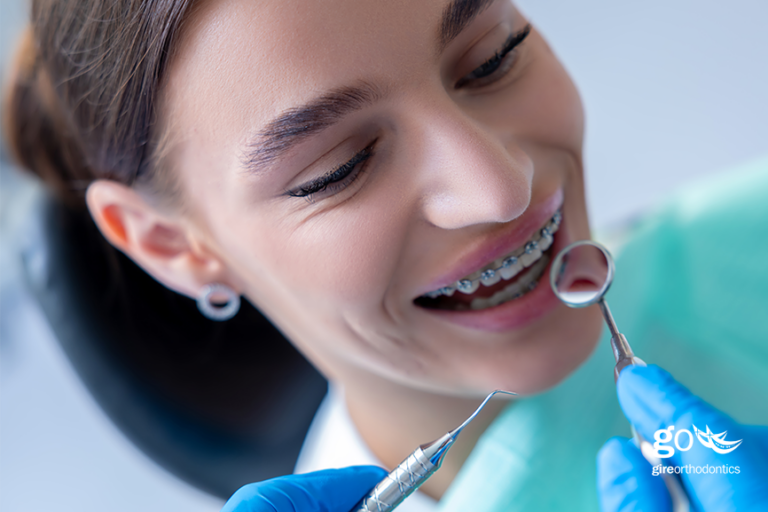
La Habra/Chino Hills, CA – If you’ve been living with a less-than-ideal smile and you’ve decided it’s time to make...
Read More
La Habra / Chino Hills, CA — If you’ve been thinking about straightening your teeth but haven’t taken the first...
Read More
La Habra / Chino Hills, CA — A confident, healthy smile can make a powerful difference at any age. Dr....
Read MoreTake control of your smile journey today with our expert orthodontic care.
Gire Orthodontics
We firmly believe that the internet should be available and accessible to anyone, and are committed to providing a website that is accessible to the widest possible audience, regardless of circumstance and ability.
To fulfill this, we aim to adhere as strictly as possible to the World Wide Web Consortium’s (W3C) Web Content Accessibility Guidelines 2.1 (WCAG 2.1) at the AA level. These guidelines explain how to make web content accessible to people with a wide array of disabilities. Complying with those guidelines helps us ensure that the website is accessible to all people: blind people, people with motor impairments, visual impairment, cognitive disabilities, and more.
This website utilizes various technologies that are meant to make it as accessible as possible at all times. We utilize an accessibility interface that allows persons with specific disabilities to adjust the website’s UI (user interface) and design it to their personal needs.
Additionally, the website utilizes an AI-based application that runs in the background and optimizes its accessibility level constantly. This application remediates the website’s HTML, adapts Its functionality and behavior for screen-readers used by the blind users, and for keyboard functions used by individuals with motor impairments.
If you’ve found a malfunction or have ideas for improvement, we’ll be happy to hear from you. You can reach out to the website’s operators by using the following email
Our website implements the ARIA attributes (Accessible Rich Internet Applications) technique, alongside various different behavioral changes, to ensure blind users visiting with screen-readers are able to read, comprehend, and enjoy the website’s functions. As soon as a user with a screen-reader enters your site, they immediately receive a prompt to enter the Screen-Reader Profile so they can browse and operate your site effectively. Here’s how our website covers some of the most important screen-reader requirements, alongside console screenshots of code examples:
Screen-reader optimization: we run a background process that learns the website’s components from top to bottom, to ensure ongoing compliance even when updating the website. In this process, we provide screen-readers with meaningful data using the ARIA set of attributes. For example, we provide accurate form labels; descriptions for actionable icons (social media icons, search icons, cart icons, etc.); validation guidance for form inputs; element roles such as buttons, menus, modal dialogues (popups), and others. Additionally, the background process scans all the website’s images and provides an accurate and meaningful image-object-recognition-based description as an ALT (alternate text) tag for images that are not described. It will also extract texts that are embedded within the image, using an OCR (optical character recognition) technology. To turn on screen-reader adjustments at any time, users need only to press the Alt+1 keyboard combination. Screen-reader users also get automatic announcements to turn the Screen-reader mode on as soon as they enter the website.
These adjustments are compatible with all popular screen readers, including JAWS and NVDA.
Keyboard navigation optimization: The background process also adjusts the website’s HTML, and adds various behaviors using JavaScript code to make the website operable by the keyboard. This includes the ability to navigate the website using the Tab and Shift+Tab keys, operate dropdowns with the arrow keys, close them with Esc, trigger buttons and links using the Enter key, navigate between radio and checkbox elements using the arrow keys, and fill them in with the Spacebar or Enter key.Additionally, keyboard users will find quick-navigation and content-skip menus, available at any time by clicking Alt+1, or as the first elements of the site while navigating with the keyboard. The background process also handles triggered popups by moving the keyboard focus towards them as soon as they appear, and not allow the focus drift outside it.
Users can also use shortcuts such as “M” (menus), “H” (headings), “F” (forms), “B” (buttons), and “G” (graphics) to jump to specific elements.
We aim to support the widest array of browsers and assistive technologies as possible, so our users can choose the best fitting tools for them, with as few limitations as possible. Therefore, we have worked very hard to be able to support all major systems that comprise over 95% of the user market share including Google Chrome, Mozilla Firefox, Apple Safari, Opera and Microsoft Edge, JAWS and NVDA (screen readers).
Despite our very best efforts to allow anybody to adjust the website to their needs. There may still be pages or sections that are not fully accessible, are in the process of becoming accessible, or are lacking an adequate technological solution to make them accessible. Still, we are continually improving our accessibility, adding, updating and improving its options and features, and developing and adopting new technologies. All this is meant to reach the optimal level of accessibility, following technological advancements. For any assistance, please reach out to