Invisalign Offers New Palatal Expander
La Habra/Chino Hills, CA – Invisalign revolutionized the orthodontic world when its aligners became widely available. They continued to improve...
Read MoreWe know the teen years can be hard enough without a mouth full of metal. Luckily for you, Gire Orthodontics is a certified Invisalign Teen provider.
Invisalign Teen is highly efficient and effective at moving teeth to their desired locations. However, there are some things you should know before settling on this as your option.
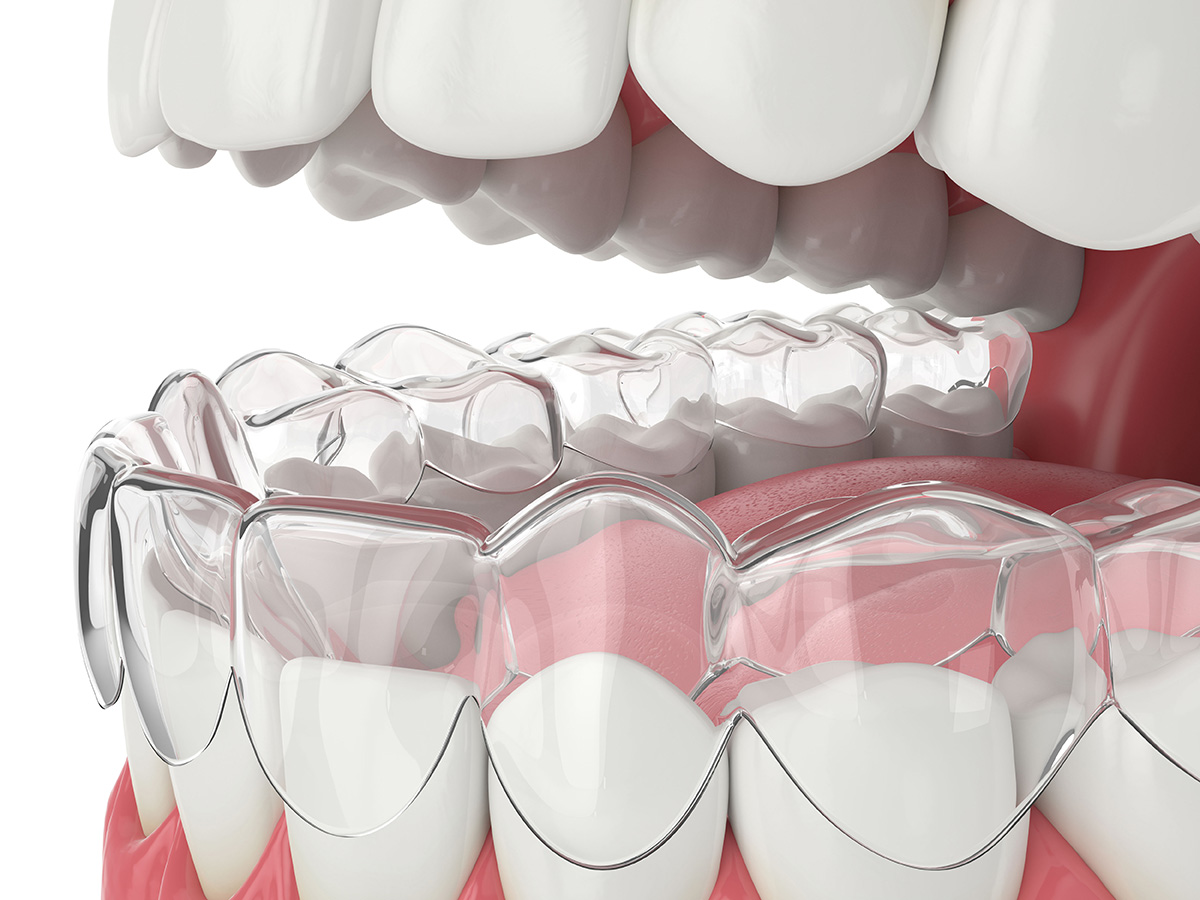
Invisalign uses a series of clear aligners to gently guide the teeth to new locations rather than a traditional bracket and wire system. Each set of aligners is worn for 22 hours a day for approximately seven to ten days before moving to the next set.
Unlike metal brackets and wires, Invisalign trays are made of a clear, smooth plastic. The flexible plastic is a patented thermoplastic called SmartTrack and is designed to offer the highest level of comfort for patients while moving the teeth safely and comfortably.
Dr. Gire will create a digital treatment plan that outlines every step of your treatment. You can even see what your smile will look like once you are finished. Each aligner set is perfectly calibrated to achieve a certain movement so it is important to wear the aligners exactly as directed by Dr. Gire. Failing to do so can impact your end result and it may extend your total treatment time.
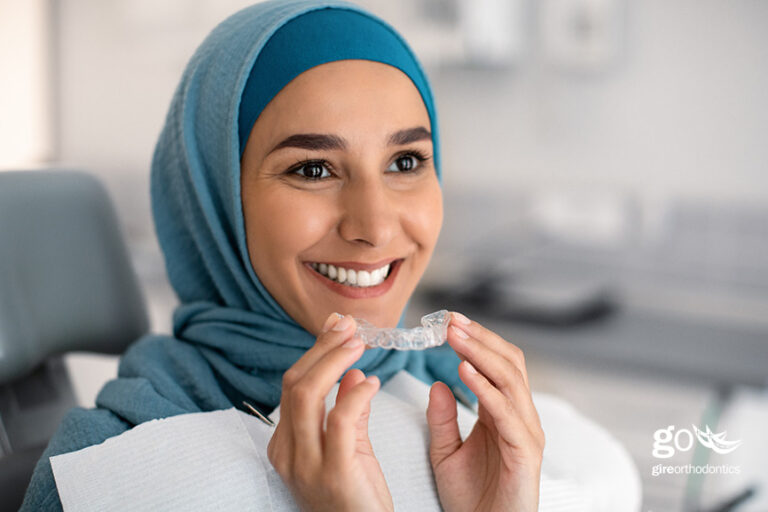
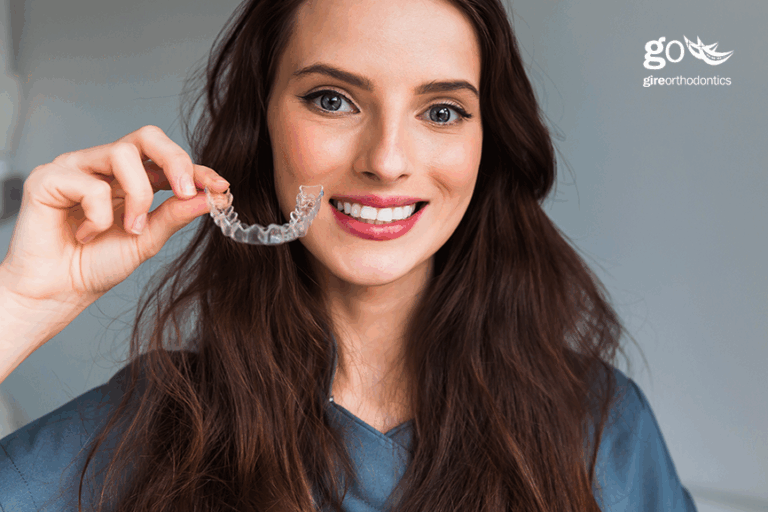
The thing patients love most about Invisalign is that the aligners are removable. That means you don’t have to change your diet or worry about brushing and flossing around brackets and wires. You just remove the aligners to eat, drink, brush, and floss. The aligners are also made of a smooth plastic that won’t irritate the inside of your mouth. Since the aligners are clear, it makes them much less noticeable in your mouth – in fact, most people won’t even notice you are wearing them.
While Invisalign has made great strides in their technology, the treatment is still the most effective on patients who have more minor to moderate malocclusions. Dr. Gire will advise whether you may be a good candidate for Invisalign.
This answer to this question is individual to each patient. There are many factors that go along with treatment time, such as severity of the malocclusion, patient compliance, and how each individual patient’s mouth responds to treatment. However, the average Invisalign patient is in treatment between 12 and 18 months.
This is a very commonly asked question. Because Invisalign aligners are removable, it can be very tempting to remove them for a big event or social gathering. However, in order to be effective, they must be worn a minimum of 22 hours a day. We discourage patients from removing them other than to eat, drink, brush and floss. Failing to wear your aligners as directed can set back your treatment time.
Yes! Certain aligners (like with the Invisalign Teen product) comes with compliance indicators that can show parents and others that you are wearing the aligners as directed. We want everyone to get the most out of their treatment and Invisalign makes it very easy to comply. If you are an adult patient who has the tendency to forget to wear the aligners, Dr. Gire will still be able to tell based on how your teeth are moving.
Patients can eat while wearing their aligners, however, we don’t recommend it. Chewing can damage the plastic of the aligners, which can then alter the fit. Drinking, especially hot or colored beverages can also damage your aligners. Always remove your aligners before eating or drinking anything other than plain water.
All orthodontic patients need to wear retainers after treatment. The periodontal ligament, teeth, and other tissues will need time to adjust to their new locations. If you don’t wear a retainer your teeth may drift back to where they were before you began your orthodontic treatment.
The cost of your treatment will depend on your individual needs, however, the cost of Invisalign is comparable to the cost of traditional metal braces. There are a few factors that will go into the overall cost of your treatment, including the severity of your issue and your age at the time of treatment. Gire Orthodontics works hard to ensure treatment is always budget friendly and will work with you to find a payment plan that can comfortably fit into your family’s budget.
It depends on your individual dental plan, however, most insurances that cover orthodontic treatment will cover the cost of Invisalign. A financial coordinator can help you understand your dental insurance policy and ensure you get the benefits it offers.
We proudly serve patients at two convenient locations, making it easy for you to access expert orthodontic care close to home.
La Habra/Chino Hills, CA – Invisalign revolutionized the orthodontic world when its aligners became widely available. They continued to improve...
Read More
La Habra/Chino Hills, CA – Invisalign treatment is growing in popularity for orthodontic patients. It’s a clear, comfortable, and removable way to...
Read More
Chino Hills/ La Habra, CA – No one wants to be in an embarrassing situation where you’re trying to hide a...
Read MoreTake control of your smile journey today with our expert orthodontic care.
Gire Orthodontics
We firmly believe that the internet should be available and accessible to anyone, and are committed to providing a website that is accessible to the widest possible audience, regardless of circumstance and ability.
To fulfill this, we aim to adhere as strictly as possible to the World Wide Web Consortium’s (W3C) Web Content Accessibility Guidelines 2.1 (WCAG 2.1) at the AA level. These guidelines explain how to make web content accessible to people with a wide array of disabilities. Complying with those guidelines helps us ensure that the website is accessible to all people: blind people, people with motor impairments, visual impairment, cognitive disabilities, and more.
This website utilizes various technologies that are meant to make it as accessible as possible at all times. We utilize an accessibility interface that allows persons with specific disabilities to adjust the website’s UI (user interface) and design it to their personal needs.
Additionally, the website utilizes an AI-based application that runs in the background and optimizes its accessibility level constantly. This application remediates the website’s HTML, adapts Its functionality and behavior for screen-readers used by the blind users, and for keyboard functions used by individuals with motor impairments.
If you’ve found a malfunction or have ideas for improvement, we’ll be happy to hear from you. You can reach out to the website’s operators by using the following email
Our website implements the ARIA attributes (Accessible Rich Internet Applications) technique, alongside various different behavioral changes, to ensure blind users visiting with screen-readers are able to read, comprehend, and enjoy the website’s functions. As soon as a user with a screen-reader enters your site, they immediately receive a prompt to enter the Screen-Reader Profile so they can browse and operate your site effectively. Here’s how our website covers some of the most important screen-reader requirements, alongside console screenshots of code examples:
Screen-reader optimization: we run a background process that learns the website’s components from top to bottom, to ensure ongoing compliance even when updating the website. In this process, we provide screen-readers with meaningful data using the ARIA set of attributes. For example, we provide accurate form labels; descriptions for actionable icons (social media icons, search icons, cart icons, etc.); validation guidance for form inputs; element roles such as buttons, menus, modal dialogues (popups), and others. Additionally, the background process scans all the website’s images and provides an accurate and meaningful image-object-recognition-based description as an ALT (alternate text) tag for images that are not described. It will also extract texts that are embedded within the image, using an OCR (optical character recognition) technology. To turn on screen-reader adjustments at any time, users need only to press the Alt+1 keyboard combination. Screen-reader users also get automatic announcements to turn the Screen-reader mode on as soon as they enter the website.
These adjustments are compatible with all popular screen readers, including JAWS and NVDA.
Keyboard navigation optimization: The background process also adjusts the website’s HTML, and adds various behaviors using JavaScript code to make the website operable by the keyboard. This includes the ability to navigate the website using the Tab and Shift+Tab keys, operate dropdowns with the arrow keys, close them with Esc, trigger buttons and links using the Enter key, navigate between radio and checkbox elements using the arrow keys, and fill them in with the Spacebar or Enter key.Additionally, keyboard users will find quick-navigation and content-skip menus, available at any time by clicking Alt+1, or as the first elements of the site while navigating with the keyboard. The background process also handles triggered popups by moving the keyboard focus towards them as soon as they appear, and not allow the focus drift outside it.
Users can also use shortcuts such as “M” (menus), “H” (headings), “F” (forms), “B” (buttons), and “G” (graphics) to jump to specific elements.
We aim to support the widest array of browsers and assistive technologies as possible, so our users can choose the best fitting tools for them, with as few limitations as possible. Therefore, we have worked very hard to be able to support all major systems that comprise over 95% of the user market share including Google Chrome, Mozilla Firefox, Apple Safari, Opera and Microsoft Edge, JAWS and NVDA (screen readers).
Despite our very best efforts to allow anybody to adjust the website to their needs. There may still be pages or sections that are not fully accessible, are in the process of becoming accessible, or are lacking an adequate technological solution to make them accessible. Still, we are continually improving our accessibility, adding, updating and improving its options and features, and developing and adopting new technologies. All this is meant to reach the optimal level of accessibility, following technological advancements. For any assistance, please reach out to