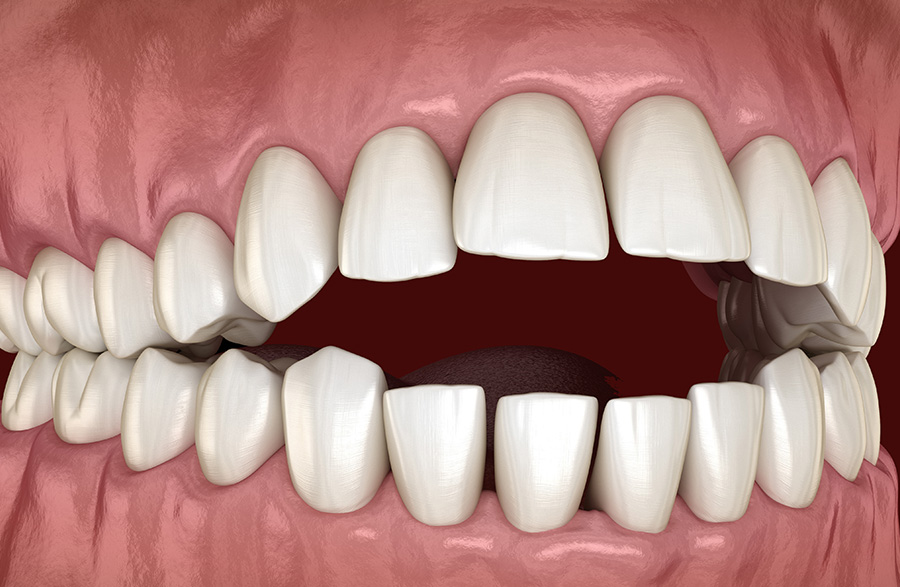
What It Means for Your Mouth
When you have an open bite, it can be difficult to fully close your mouth, and it can interfere with the function of your teeth. For example, in an anterior open bite, because the front teeth never quite meet, biting into food, like an apple or a sandwich, often doesn’t work the way it should. Some patients also notice their lips look a little spread out or stretched, because the mouth isn’t resting in its normal closed position.
It’s not just cosmetic. In addition to chewing issues, an open bite that goes uncorrected can affect the other functions of your mouth, such as speech, especially sounds that need the tongue and front teeth to work together.
Why It Happens
Childhood habits are one of the most common causes. Thumb-sucking, tongue thrusting, tongue-posture, and prolonged pacifier use can all keep the teeth from coming together properly while the mouth is still being developed. In other cases, it comes down to how the jaw itself is growing, a skeletal pattern that is often inherited and isn’t about habits at all.
There is some interesting work being done to help prevent anterior open bites. For example, orthodontic pacifiers are designed to support proper tongue placement and jaw development, and are now being used to try to prevent open bites and crossbites before they start, instead of just soothing a baby the old-fashioned way.