


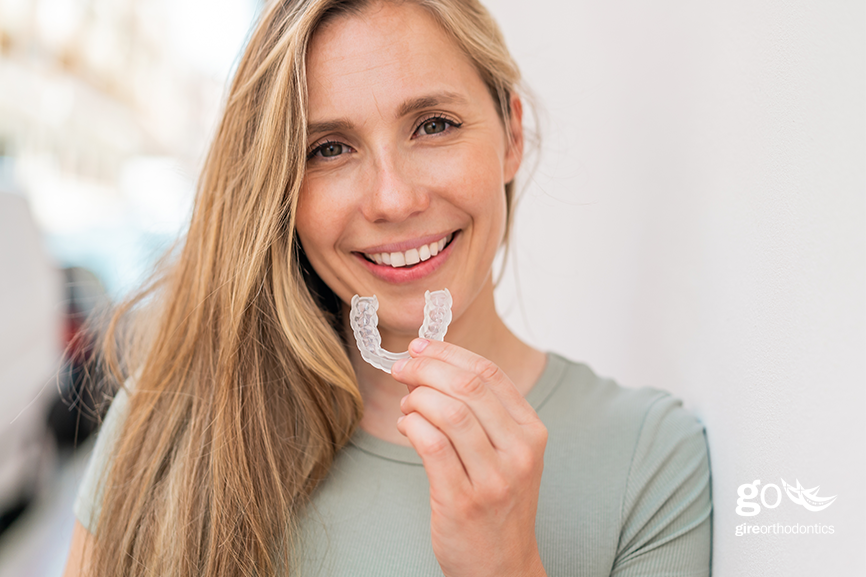
La Habra/Chino Hills, CA – Our lives are busy, and we are often on the lookout for shortcuts and hacks to make our lives simpler. So if you’re interested in orthodontic treatment, having treatment come directly to you may sound appealing. Direct-to-consumer aligner brands, such as Candid, Byte, and SmileDirectClub, have promised to do just that. But do their results live up to the hype? Dr. Robert Gire explains why patients should be cautious about mail-order orthodontic treatment.
What are direct-to-consumer orthodontics?
Companies promoting direct-to-consumer orthodontics advertise clear aligners that can be mailed directly to your home. Patients are responsible for taking their own impressions and images, which are then sent in to have aligners created. There is no in-person exam or consultation, and the only ongoing monitoring that takes place is through selfies that are sent in at different intervals throughout the wearing of the aligners.
On paper, this may sound appealing to many people. Why try to fit in more appointments to already busy schedules when you can have clear aligners mailed directly to your doorstep?
Dr. Gire cautions patients to dive a little deeper into the science of orthodontic treatment before opting for a direct-to-consumer approach.
“There is a lot more that goes into orthodontic treatment than just crafting a pretty smile,” says Dr. Gire. “The science of moving teeth is intricate and is much more than just a cosmetic procedure – it is a complex medical procedure that involves bone remodeling and restructuring to achieve not just a gorgeous grin, but a harmonious bite and symmetry of the face.”
What are the Drawbacks to DTC Orthodontics?
The biggest drawback to DTC aligner therapy is that there is no direct, continuous monitoring by a trained orthodontist. While selfies are reviewed at regular intervals by an orthodontist, there is no in-person monitoring to ensure treatment is progressing properly.
Let’s take a closer look at some of Dr. Gire’s biggest concerns with DTC orthodontics.
- Inaccurate impressions. Mail-order aligner companies rely on the patient to take their impressions themselves. These impressions are what are used to create the aligners, so what happens if the patient makes an error in their impressions? Even the smallest error can result in aligners that don’t fit properly. An improperly fitting aligner can cause a host of issues, including moving teeth incorrectly or causing damage to the bite.
- Worsening of issues. Orthodontic treatment creates straighter smiles, but it also works to ensure a properly functioning bite. Without regular, in-person monitoring, an orthodontist cannot ensure the bite is also being corrected. Without a consultation, underlying bit issues may even be overlooked. And adding aligners can end up causing more harm than good. Bite issues that aren’t corrected or that are made worse can lead to headaches, jaw pain, difficulty chewing and speaking, and uneven wear of the teeth.
- Gum and bone damage. The majority of patients utilizing DTC orthodontic treatment are adults. While healthy teeth can be moved at any age, if patients have any underlying issues, such as gum disease, these issues can be exacerbated if not treated prior to orthodontic treatment. An orthodontist must assess the health of a patient’s gums and bones prior to starting treatment to avoid issues such as gum recession, root damage, and even tooth loss.
- Higher costs. If your issue isn’t corrected properly or made worse, you may need to seek out in-person treatment from an orthodontist. And that can significantly increase your investment in your smile. Starting with in-person, expert care from a trained orthodontist can save you time and money in the long run.
But the physical issues that can arise from DTC orthodontics aren’t the only thing that concerns Dr. Gire.
“Several DTC orthodontic companies have closed their doors, leaving their patients without a way to continue their treatment,” says Dr. Gire. “When this happens, patients have no clear path forward and no legal recourse to recoup their investment and then pay to continue their treatment or correct issues the DTC aligner treatment created.”
What to Do If Your Mail-Order Aligner Treatment Is Interrupted
If you are one of these patients who has been left with a partially corrected smile mid-treatment, what should you do? Follow Dr. Gire’s tips:

- Do not stop wearing your aligners. This could cause your teeth to shift back to where they were before treatment started, or worse, could cause your teeth to move to an even more unstable position.
- Seek in-person professional care. Most orthodontists will schedule a complimentary consultation so they can assess your smile needs and explain recommended treatment and associated costs. This appointment will include X-rays and scans so the orthodontist can determine how best to proceed with continuing your treatment.
- Be sure you have all your documentation from your DTC company. You should have received a treatment plan from your mail-order company that included before and after projections. Bring this information, as well as your aligners, to your visit with a new orthodontist. This will help them as they craft your new treatment plan.
- Begin your treatment with a trained orthodontist and rest easy knowing you are in the hands of a professional who is there to guide you each step of the way.
- Consider financial and legal steps, if applicable. One big concern is paying for treatment that was never rendered. If you paid for treatment that wasn’t delivered, contact your financial institution to see what recourse you may have. It can also be helpful to file a complaint. You can contact the Better Business Bureau, your attorney general, and even the Federal Trade Commission to detail your experience. While this won’t get your smile back, it can help lay the foundation for increased regulation.
“I know we live in a world where it can be much easier to pay for convenience,” says Dr. Gire. “But when it comes to your health and your smile, convenience should never outweigh your safety. The DTC model of orthodontics removes in-person oversight, which can lead to unsafe tooth movement.”
To ensure a healthy, lasting smile, choose treatment from an experienced orthodontist that includes a comprehensive consultation and in-person, continuous supervision from a team of professionals.